
Quick Lime Lumps – Industrial-Grade Calcium Oxide
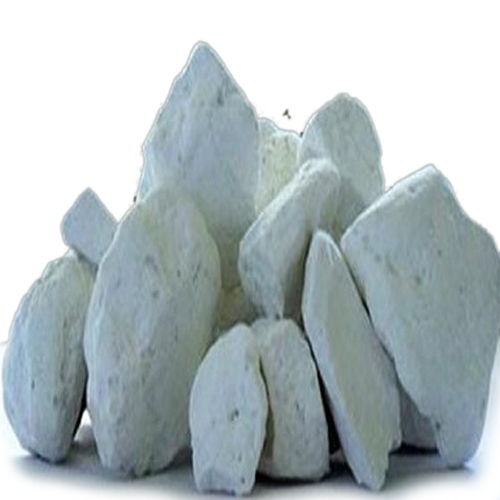
Quick Lime Lumps (also known as Burnt Lime or Calcium Oxide) are produced by calcining high-purity limestone at high temperatures. Rich in calcium oxide (CaO), they are highly reactive and valued for their alkalinity, reactivity, and versatility. Quick Lime Lumps are widely used across construction, metallurgy, water treatment, chemical manufacturing, and environmental applications.
1. Construction & Building Materials
Used in the production of lime mortars, plasters, and renders as a binding and stabilizing agent.
Improves workability, strength, and durability of construction materials.
Essential in soil stabilization for road and foundation works.
Plays a role in manufacturing autoclaved aerated concrete (AAC) blocks and other lime-based building products.
2. Metallurgical & Steel Industry
Acts as a fluxing agent in steel, iron, and non-ferrous metal production to remove impurities such as silica, phosphorus, and sulfur.
Used in sintering plants and smelting operations to enhance metal purity.
Serves as a slag conditioner in electric arc furnaces and basic oxygen furnaces.
3. Environmental Applications
Applied in water and wastewater treatment for pH control, softening, and removal of heavy metals.
Used in flue gas desulfurization (FGD) to reduce sulfur dioxide (SO₂) emissions.
Effective in sludge treatment by stabilizing and disinfecting biosolids.
4. Agriculture & Soil Conditioning
Used as a soil stabilizer and neutralizer, correcting acidity and improving pH levels.
Enhances the availability of essential nutrients in soil.
Supports composting by accelerating decomposition and reducing odor.
5. Chemical & Industrial Uses
Serves as a key raw material in the production of calcium hydroxide (hydrated lime).
Used in the manufacture of chemicals, paper, sugar, and leather processing.
Plays an important role in gas purification, petroleum refining, and food processing (where permitted).